SEO still matters
Let’s be direct: organic search rankings still drive real traffic and real revenue for most UK businesses. Google still processes billions of queries a day. A well-optimised page that ranks on the right keywords still earns compounding, unpaid demand. This is not an argument against SEO. It’s an argument that SEO now covers less of the customer journey than it used to.
The gap that’s opened up
The shift happened gradually and then quickly. Customers, particularly in B2B categories, have started using AI answer engines as part of their research process. They’re not replacing Google entirely, but they’re adding a step. Some start on ChatGPT or Perplexity. Some read Google’s AI Overviews and never reach the organic results underneath. Many do both.
The critical point: SEO gets you ranked in Google results. It doesn’t automatically get you cited in AI answers. The signals that govern AI citations are different from the signals that govern rankings. A page can rank first on Google for a competitive keyword and still not appear when someone asks ChatGPT the equivalent question.
AI search visibility versus traditional SEO
The two disciplines answer different questions. SEO asks: when someone searches this phrase, how high do we appear in the list? AI search visibility asks: when someone asks this question, are we in the answer at all? That difference runs through everything.
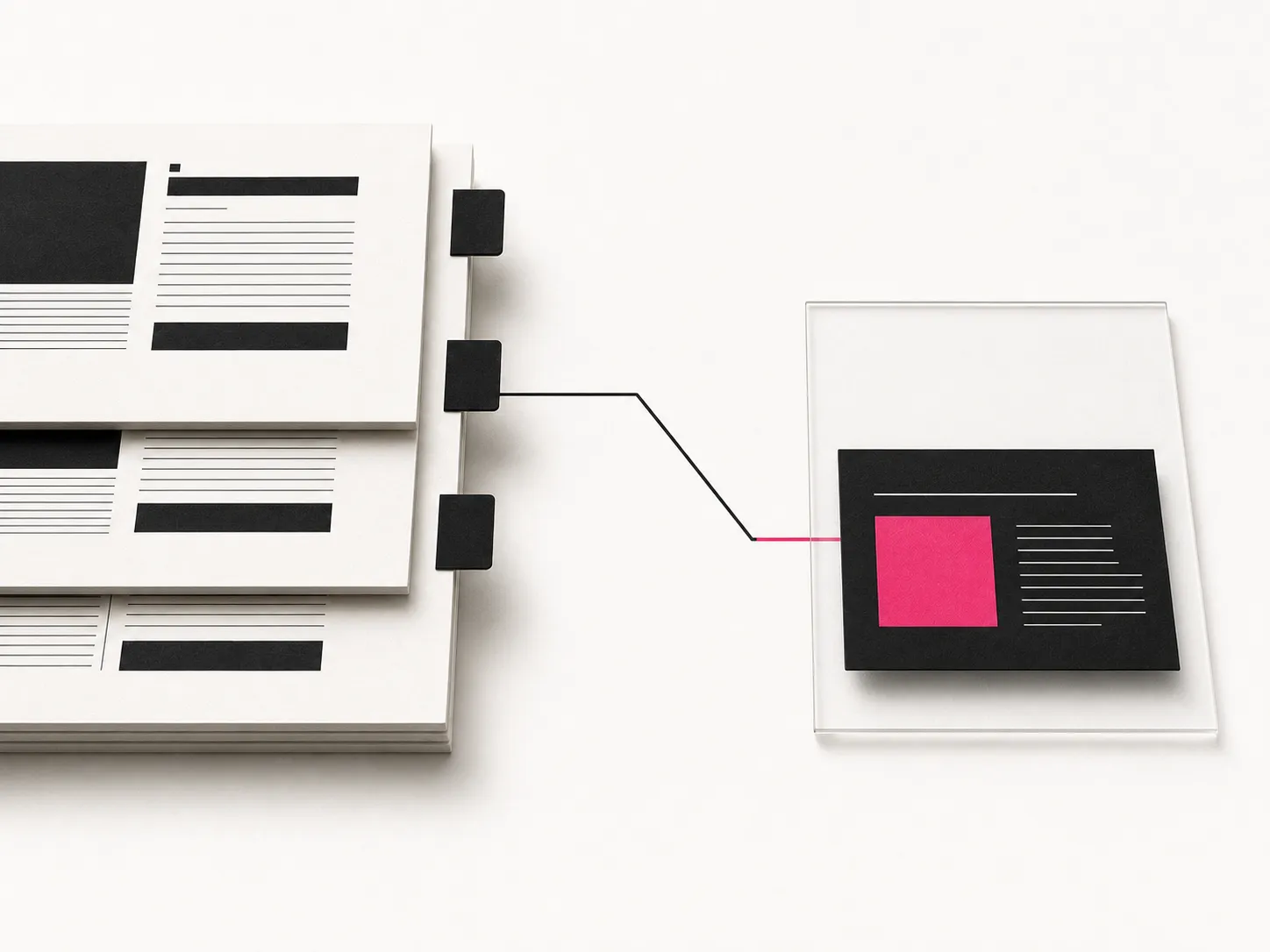
The unit of competition. SEO competes page against page for a position. AI visibility competes passage against passage for a citation. An answer engine quotes the clearest paragraph it found, not the highest-ranked page it found.
The winning signals. Rankings lean on keywords, links and site quality earned over time. Citations lean on clarity, specificity and corroboration: whether a claim is quotable on its own, and whether anyone beyond your own website confirms it.
The result. A ranking is a position you hold in a list, and the customer reads your title and description as you wrote them. A citation is a mention inside an answer the model composed, including its own description of who you are. Accuracy becomes part of visibility. Being described wrongly is its own kind of invisible.
The measurement. Rankings are measured in Search Console and rank trackers. AI visibility has no equivalent dashboard. You measure it by asking the systems real customer questions on a schedule and recording who they name.
The failure mode. SEO fails visibly: positions slip, traffic drops, someone notices. AI visibility fails silently. The customer asks, the answer recommends a competitor, and nothing shows up in your analytics because no click ever happened.
Where the two overlap
The answer isn’t to abandon SEO and pivot entirely to AI search visibility. The two are complementary, and many foundations serve both: clear content, strong site structure, fast pages, genuine authority. A site that is easy for Googlebot to crawl is usually easy for an answer engine to read.
That shared infrastructure is the focus of Search Foundations, covering technical performance, analytics, user experience and front-end implementation.
Where customers are going
The data on this is still developing, but the pattern is clear. AI answer engine usage is growing fastest among exactly the demographic most UK B2B businesses care about: educated, research-oriented customers in professional categories. They’re asking more considered questions and receiving more complete answers than a list of links can provide.
When your brand doesn’t appear in those answers, you’re invisible at a critical point in the decision journey, and you won’t see it in your analytics because the customer never clicked through.
What to do about it
Keep the SEO. Add the specific work AI visibility asks for: producing content AI systems can quote directly, building the corroboration signals they weigh, and regularly checking what the major systems actually say about your category. Our guide to what AI search visibility is covers those signals in detail.
That last habit, reading the answers, is the simplest and most important starting point. If you don’t know what ChatGPT says when a customer asks about your category, that’s the first thing to find out. A free AI visibility audit is the fastest way to get that picture done properly.